
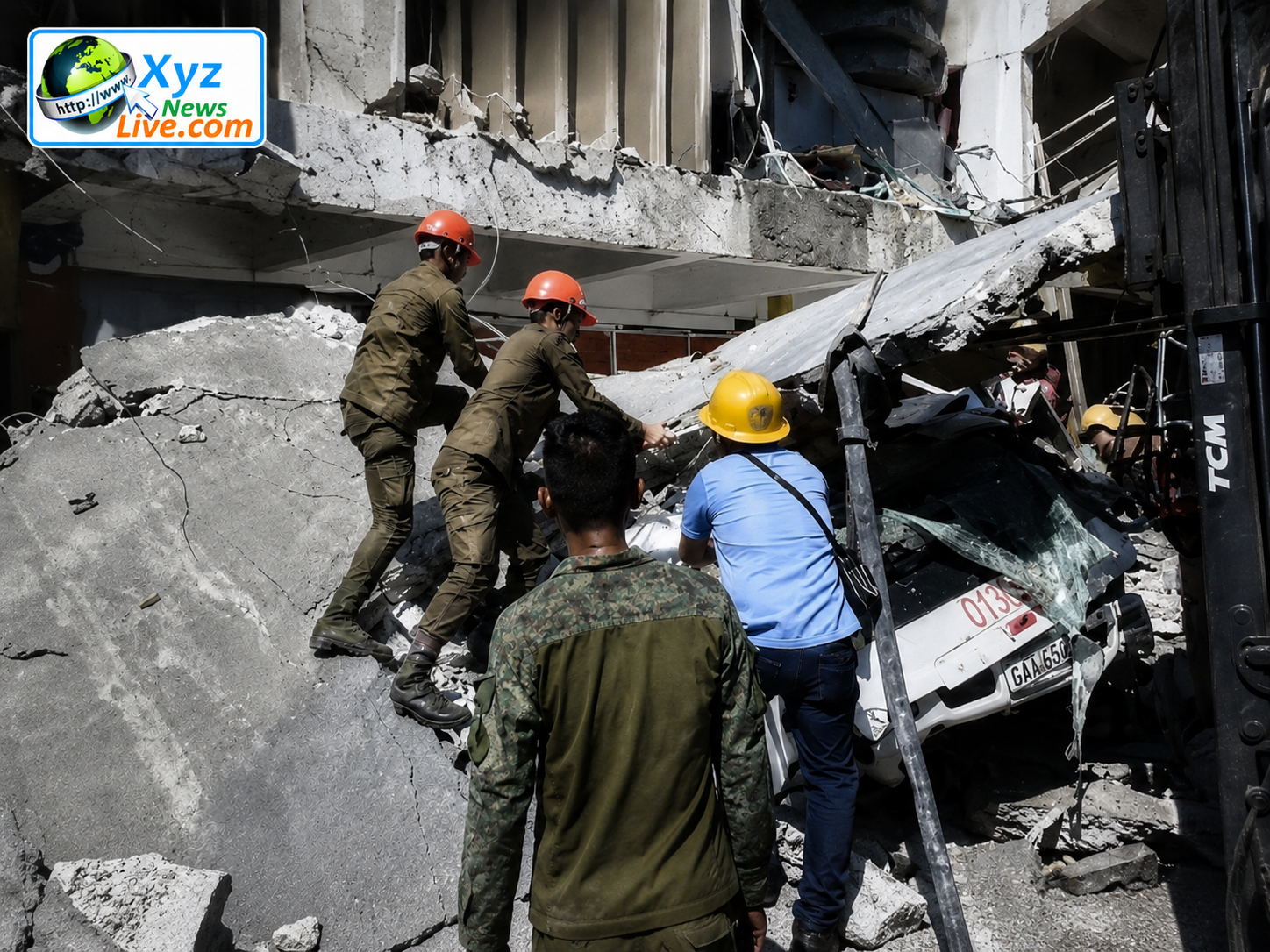
Philippines earthquake authorities were assessing the damage from the quake, with the office of civil defence seeking to verify initial reports that 15 people had been killed and 129 injured, mostly from falling debris.

Where in the Philippines did the earthquake hit?
The quake hit early in the morning, shortly before 7:40am local time on Monday (23:40 GMT Sunday), according to the United States Geological Survey.
The epicentre was offshore, 32km (20 miles) west of Maasim in Sarangani province on the southern tip of the Philippines earthquake’ Mindanao island. The earthquake occurred at an estimated depth of 33km (21 miles).
Schools were reopening in the Philippines after a long break, and the tremors were felt strongly in a dozen provinces as far from the epicentre as 420km (261 miles) in the city of Manado on the Indonesian island of Sulawesi.
By late morning local time, the Philippine Institute of Volcanology and Seismology had reported 138 aftershocks, the highest at a magnitude 6.7.
A Devastating Earthquake Shakes the Philippines
A powerful earthquake struck the Philippines earthquake, leaving at least 15 people dead and dozens injured, according to initial reports from local authorities. The strong tremor triggered widespread panic across several provinces and raised fears of a potential tsunami, prompting emergency agencies to launch rapid response operations.
The earthquake, which occurred during the early hours of the day, was felt across a large part of the country. Residents rushed out of homes, offices, and public buildings as the ground shook violently. Many areas experienced power outages, communication disruptions, and structural damage.
Also Read: https://xyznewslive.com/tmc-mp-resigns-amid-mamata-banerjees-delhi
The latest Philippines earthquake news has become a major global headline as rescue teams continue searching for survivors while officials assess the full extent of the destruction.
Earthquake Magnitude and Epicenter
According to preliminary seismic reports, the earthquake registered a significant magnitude, making it one of the strongest quakes to hit the region in recent years. The epicenter was located offshore, increasing concerns about underwater disturbances that could generate tsunami waves.
The Philippines sits along the Pacific Ring of Fire, one of the world’s most active seismic zones. Due to its geographical location, the country frequently experiences earthquakes and volcanic activity.
Also Read: https://xyznewslive.com/cockroach-janta-party-protest-live/
Experts explained that Philippines earthquake originating beneath the ocean can sometimes displace massive amounts of water, leading to tsunami threats. This possibility prompted authorities to immediately issue warnings and closely monitor coastal regions.
Death Toll Rises to 15
Authorities confirmed that at least 15 people lost their lives due to the Philippines earthquake. Most fatalities were caused by collapsing structures, falling debris, and landslides triggered by the powerful shaking.
Emergency responders reported that several victims were trapped under damaged buildings. Search-and-rescue operations began within hours of the disaster, with teams working around the clock to locate survivors.
Hospitals in affected regions have been placed on high alert, treating injured residents suffering from fractures, cuts, and other earthquake-related injuries.
Officials warned that the death toll could increase as rescue workers continue reaching remote and heavily affected areas.
Tsunami Fears Trigger Emergency Alerts
One of the biggest concerns following the earthquake was the possibility of a tsunami. Government agencies issued precautionary alerts for coastal communities, advising residents to move to higher ground and remain vigilant.
Sirens were activated in several coastal regions, and emergency broadcasts urged people to follow official instructions. Thousands of residents temporarily evacuated beaches and low-lying areas.
Although tsunami fears caused widespread concern, authorities emphasized that monitoring systems were continuously evaluating ocean conditions. Emergency teams remained prepared for rapid action should dangerous waves be detected.
The swift response helped reduce panic and ensured public safety while experts analyzed incoming data.
Massive Emergency Response Underway
The Philippine government quickly activated disaster response protocols following the earthquake. National and local emergency agencies coordinated rescue efforts, medical assistance, and relief distribution Philippines earthquake.
Key emergency measures included:
- Deployment of rescue teams to affected regions.
- Establishment of temporary evacuation centers.
- Emergency medical services for injured victims.
- Damage assessment operations.
- Distribution of food, water, and essential supplies.
Military units and disaster management personnel joined rescue operations to assist local authorities. Helicopters and specialized equipment were also mobilized to access hard-to-reach locations.
Government officials stated that protecting lives remains the highest priority during the ongoing emergency Philippines earthquake.

Infrastructure Damage Across Multiple Regions
The earthquake caused extensive damage to infrastructure, including roads, bridges, schools, hospitals, and residential buildings.
Witnesses reported cracks in highways, collapsed walls, and damaged utility systems. Several communities experienced temporary power outages as electrical infrastructure was affected.
Transportation services in some regions were suspended to allow engineers to inspect roads and bridges for structural safety. Authorities urged residents to avoid damaged buildings until inspections were completed.
Economic losses are expected to be substantial, though officials say it is still too early to estimate the total cost of the disaster Philippines earthquake.
Residents Describe Terrifying Moments
Survivors shared dramatic accounts of the earthquake’s impact. Many described hearing loud rumbling sounds moments before intense shaking began.
Families rushed outdoors seeking safety as furniture toppled, windows shattered, and walls cracked. Some residents reported being awakened by the violent movement of their homes.
In heavily affected areas, fear spread quickly as rumors of a tsunami circulated on social media. Emergency agencies worked to provide accurate information and prevent misinformation from causing additional panic.
Many residents expressed gratitude to first responders who arrived quickly to assist affected communities Philippines earthquake.
Why the Philippines Is Prone to Earthquakes
The Philippines is one of the most earthquake-prone countries in the world due to its location on the Pacific Ring of Fire.
This region contains numerous tectonic plate boundaries where intense geological activity occurs. The movement of these plates frequently generates earthquakes, volcanic eruptions, and seismic disturbances.
Several major fault systems run through the Philippines, increasing the likelihood of significant seismic events. Scientists continuously monitor these fault lines to improve Philippines earthquake preparedness and early warning capabilities.
Despite advancements in disaster management, powerful earthquakes remain a constant threat for millions of Filipinos.
Aftershocks Continue to Shake the Region
Following the main earthquake, numerous aftershocks were recorded. Some of these secondary tremors were strong enough to be felt by residents, causing additional concern.
Experts explained that aftershocks are a normal part of the Philippines earthquake process and may continue for days or even weeks after a major seismic event.
Authorities advised residents to remain cautious and prepare for possible additional shaking. Damaged buildings are particularly vulnerable during aftershocks, increasing the risk of further collapses.
Emergency officials urged people to follow safety guidelines and stay informed through official government channels.
International Support and Humanitarian Assistance
Several countries and international organizations expressed solidarity with the Philippines following the disaster.
Humanitarian agencies are closely monitoring the situation and preparing assistance if needed. International disaster response experts may provide support for rescue operations, medical aid, and recovery efforts.
Global leaders offered condolences to the families of those who lost their lives and praised the efforts of emergency responders working under difficult conditions.
The international community continues to watch developments as authorities assess the full impact of the Philippines earthquake.
Earthquake Preparedness: Important Safety Tips
Natural disasters such as earthquakes highlight the importance of preparedness. Experts recommend several key safety measures:
Before an Earthquake
- Create an emergency plan.
- Prepare disaster supply kits.
- Identify safe areas inside buildings.
- Learn evacuation routes.
During an Earthquake
- Drop, Cover, and Hold On.
- Stay away from windows and heavy objects.
- Avoid elevators.
- Move to open areas if outdoors.
After an Earthquake
- Check for injuries.
- Watch for aftershocks.
- Avoid damaged structures.
- Follow official emergency instructions.
Preparedness can significantly reduce injuries and save lives during major Philippines earthquake.
Economic and Social Impact
Beyond the immediate loss of life, the earthquake is expected to have lasting economic and social consequences.
Businesses may face disruptions, schools could remain closed for safety inspections, and infrastructure repairs may take months. Tourism in affected regions could also experience temporary declines.
Families who lost homes will require long-term assistance, while reconstruction efforts will demand significant resources from both local and national governments.
Experts stress that recovery will be a gradual process requiring cooperation among government agencies, humanitarian organizations, and local communities.
Looking Ahead
As rescue efforts continue, authorities remain focused on locating survivors, assisting affected families, and restoring essential services. Engineers are inspecting damaged structures while emergency agencies monitor aftershocks and potential secondary hazards.
The latest Philippines earthquake news serves as a reminder of the devastating power of natural disasters and the importance of disaster preparedness in vulnerable regions.
While the confirmed death toll currently stands at 15, officials continue to assess the situation. Communities across the Philippines are coming together to support those affected, demonstrating resilience in the face of tragedy.
The coming days will be critical as rescue operations progress, damage assessments continue, and recovery efforts begin. The world watches closely as the Philippines earthquake responds to yet another major seismic disaster.
Also Read: https://xyznewslive.com/us-iran-war-highlights-qeshm-island-radar-sites/

The XYZ Official Team is the editorial team behind XYZ News Live. The team covers education, government schemes, business, entertainment, sports, and breaking news. Its mission is to provide readers with accurate, reliable, and up-to-date information through well-researched content.
Website: https://xyznewslive.com
1 thought on “Philippines Earthquake News: Powerful Quake Kills 15, Tsunami Fears Trigger Emergency Response”