
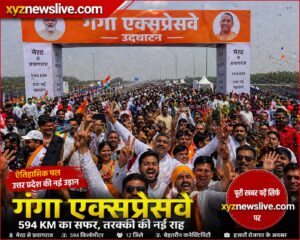
Ganga Expressway LIVE Update: PM Modi inaugurates expressway, said it will be extended from Meerut to Haridwar. The Ganga Expressway, a significant development in infrastructure, aims to enhance connectivity and boost economic growth in the region. With the inauguration led by PM Modi and CM Yogi, this expressway is set to transform travel and commerce. Stay tuned for more updates on Ganga Expressway news as it unfolds on April 29. Ganga Expressway Inauguration LIVE Updates: प्रधानमंत्री नरेन्द्र मोदी ने आज हरदोई पहुंचकर 594 किलोमीटर लंबे गंगा एक्सप्रेसवे का भव्य लोकार्पण किया।
Digital Desk, New Delhi/Hardoi (Ganga Expressway): On April 29, 2026, Prime Minister Narendra Modi inaugurated the 594-km-long, 6-lane (expandable to 8 lanes) Ganga Expressway from Hardoi in Uttar Pradesh. Connecting Meerut to Prayagraj, this greenfield expressway—built at a cost of ₹36,230 crore—is the longest expressway in Uttar Pradesh and passes through 12 districts. It will enhance connectivity from Western UP to Purvanchal.
(Ganga Expressway) The Ganga Expressway will not only connect 12 districts and 519 villages within the state, but will also become a key driver of Uttar Pradesh’s economy through 12 industrial corridors (integrated manufacturing and logistics clusters).
Where will entry to the Ganga Expressway be from in Meerut?Entry to the Ganga Expressway from Meerut will be available at km 16 on the Meerut–Garh–Bulandshahr National Highway. This entry point is located at village Bijoli, before Kharkhoda. Access roads have been provided on both sides of the Bulandshahr Highway for entry and exit to the Ganga Expressway.
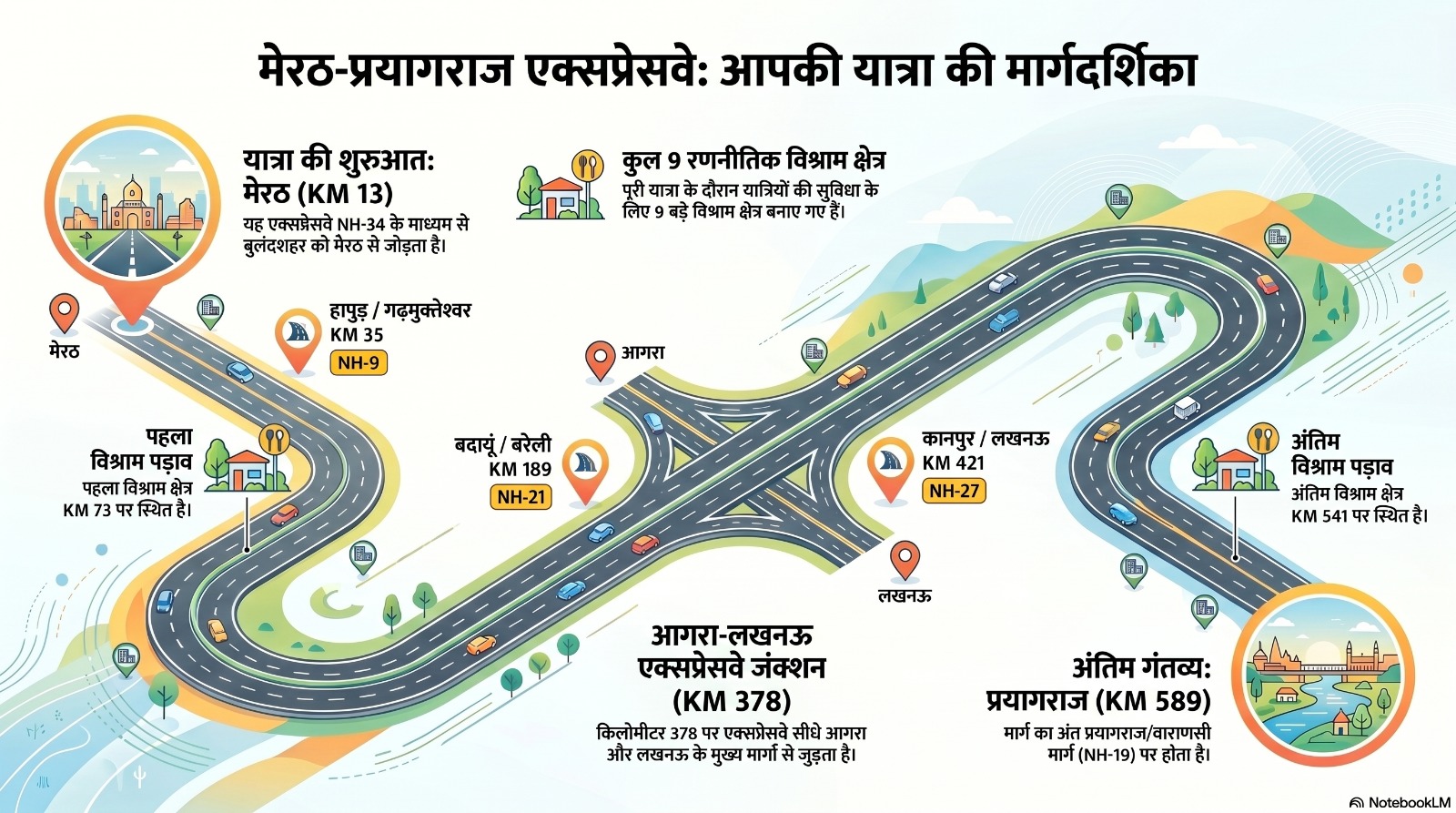
What is the route map of the Ganga Expressway?The 594-kilometer-long Ganga Expressway connects 12 districts, including Meerut, Hapur, Bulandshahr, Amroha, Sambhal, Badaun, Shahjahanpur, Hardoi, Unnao, Rae Bareli, Pratapgarh, and Prayagraj. The 594-kilometer-long Ganga Expressway begins at Bijauli village in Meerut district and ends at Judapur village in Prayagraj district.
The Ganga Expressway is Uttar Pradesh’s longest expressway.The Ganga Expressway is Uttar Pradesh’s longest expressway. PM Modi will arrive in Hardoi shortly and inaugurate the 594-kilometer-long Ganga Expressway. The Ganga Expressway: 594 kilometers long… Uttar Pradesh’s longest expressway, connecting 12 districts. Here’s the complete route map.
CM Yogi arrives at the helipad to welcome PM Modi of Ganga Expressway. Prime Minister Modi is scheduled to arrive shortly for the inauguration of the Ganga Expressway. All ministers and MPs have arrived on the stage. CM Yogi has arrived at the helipad to welcome the Prime Minister.
Ganga Expressway Launch: People are excited for the PM’s arrival.There is great excitement among the people in Mallawan regarding the inauguration of the Ganga Expressway by Prime Minister Narendra Modi. Before the Prime Minister’s arrival, people are arriving at the pandal site, chanting slogans. Today, Prime Minister Modi will do something more for the region.
Ganga Expressway Live Updates: Touch-and-Go rehearsal at the helipadTouch-and-go rehearsals were conducted at the helipad to ensure the safe landing of the Prime Minister’s helicopter. The rehearsal took place twice on Monday morning and afternoon with separate helicopters. Service lanes on both sides of the expressway have been closed, and only officials are allowed access.
The expressway aims not only to speed up travel but also to boost Uttar Pradesh’s economy. Previously, the journey from Meerut to Prayagraj took approximately 10 to 12 hours, but with the opening of the Ganga Expressway, this distance will be reduced to approximately 6 to 7 hours. This will save people time and accelerate business activities.
The unique feature of this expressway is that it has been designed with six lanes, which can be expanded to eight lanes in the future. Furthermore, it features modern amenities such as a Fastag-based toll system, improved security, rest areas, food plazas, and EV charging stations. Furthermore, an emergency airstrip has also been constructed on this expressway, where fighter jets can land if needed.
Another major benefit of the Ganga Expressway is that it will reduce the distance between the western and eastern parts of the state and help establish an economic balance between the two regions. This will facilitate the transportation of agricultural products to markets, allowing farmers to obtain better prices. Furthermore, industries will benefit from reduced logistics costs.
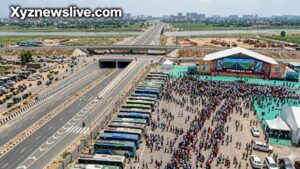
The Ganga Expressway has emerged as a game-changing project in Uttar Pradesh’s infrastructure sector. It has recently become a major topic of discussion in UP Expressway News, as it is poised to give a new direction to the state’s development. Known as the Meerut to Prayagraj Expressway, the project is approximately 594 kilometers long, directly connecting western and eastern Uttar Pradesh.
The Ganga Expressway routebegins in Meerut and continues through Hapur, Bulandshahr, Amroha, Sambhal, Badaun, Shahjahanpur, Hardoi, Unnao, Rae Bareli, and Pratapgarh to Prayagraj. All the districts along this route are experiencing rapid development. The potential for new investment, particularly in the industrial and logistics sectors, has increased.
According to UP Expressway News, this expressway will allow vehicles to travel at speeds of up to 120 km/h, making it one of the fastest and most modern expressways in the country. Additionally, it offers amenities such as a FastTag toll system, food plazas, petrol pumps, EV charging stations, and a trauma center.
The government believes that the Ganga Expressway will create new employment opportunities in the state. It is estimated that this project will provide direct and indirect employment to millions of people. Additionally, the expressway will benefit both agriculture and industry, making the movement of goods faster and cheaper.
In conclusion, the Ganga Expressway is not just a story about a road project, but rather a new beginning for Uttar Pradesh’s development, connectivity, and economic progress. In the future, this expressway could become a symbol of the state’s identity and development.

I am a Founder and Editor of XYZ News Live. He writes on education, government schemes, technology, and breaking news. His goal is to provide readers with accurate and reliable information.