

China’s Superfast Maglev Train Shocks the World
China has once again captured global attention with its groundbreaking superfast maglev train technology. The country’s latest magnetic levitation (maglev) train has demonstrated extraordinary speed and innovation, leaving transportation experts and travelers amazed. As nations around the world compete to develop faster, safer, and more efficient transportation systems, China’s achievements in high-speed rail technology have placed it at the forefront of the global race.

The China Superfast Maglev Train is not just another railway project. It represents a major leap toward the future of transportation, offering unprecedented speed, reduced travel times, and environmentally friendly travel options. Experts believe this technology could revolutionize how people travel between cities and countries in the coming decades.
What Is a Maglev Train? (China’s Superfast Maglev Train)
A maglev train is a type of high-speed train that uses magnetic levitation technology instead of traditional wheels and tracks. Unlike conventional trains that experience friction from wheels touching rails, maglev trains float above the track using powerful magnets.
This floating mechanism significantly reduces resistance, allowing trains to travel at incredibly high speeds while maintaining smooth and quiet operation.
Key Features of Maglev Train:
- No wheel-to-track friction
- Extremely high speeds
- Reduced maintenance costs
- Lower noise pollution
- Enhanced passenger comfort
- Improved energy efficiency
These advantages make maglev trains one of the most promising transportation technologies in the world today.
China’s Latest Superfast Maglev Train:(China’s Superfast Maglev Train)
China recently unveiled a new generation of maglev train capable of reaching speeds that were once considered impossible for rail transportation. Reports suggest the train can achieve speeds of up to 600 kilometers per hour (373 mph) under testing conditions.
At this speed, traveling between major cities could become dramatically faster than traditional rail and even rival short-distance air travel.
For example:
| Route | Current Travel Time | Maglev Travel Time |
|---|---|---|
| Beijing to Shanghai | Around 4.5 Hours | Around 2.5 Hours |
| Guangzhou to Shenzhen | About 1 Hour | Less than 30 Minutes |
| Major Intercity Routes | Several Hours | Significantly Reduced |
The potential impact on business travel, tourism, and economic growth could be enormous.
How Does China’s Maglev Train Work?(China’s Superfast Maglev Train
The secret behind the China Superfast Maglev Train lies in advanced electromagnetic technology.
Magnetic Levitation:
Powerful electromagnets lift the train slightly above the guideway, eliminating physical contact.
Electromagnetic Propulsion:
Instead of traditional engines, magnetic fields push and pull the train forward at incredible speeds.
Intelligent Control Systems:
Advanced computer systems constantly monitor speed, stability, and safety to ensure smooth operation.
This combination of technologies creates a transportation system that is faster, safer, and more efficient than conventional rail networks.
Why the World Is Talking About China’s Train:
Transportation experts around the globe have praised China’s investment in cutting-edge rail infrastructure. The latest maglev train project has generated worldwide attention for several reasons.
Record-Breaking Speed:
The train’s ability to reach speeds near 600 km/h puts it among the fastest ground transportation systems ever developed.
Technological Leadership:
China continues to establish itself as a global leader in high-speed rail innovation.
Economic Benefits:
Faster transportation can increase trade, business activity, and tourism while improving regional connectivity.
Environmental Advantages:
Maglev systems can potentially reduce carbon emissions compared to short-distance air travel and traditional vehicles.
The Evolution of High-Speed Rail in China Train:
China’s success with maglev technology did not happen overnight.

Over the past two decades, the country has invested billions of dollars in railway development, creating the world’s largest high-speed rail network.
Major milestones include:
Early 2000s
China began experimenting with advanced rail technologies and international partnerships.
2004
The Shanghai Maglev Train became the world’s first commercially operated high-speed maglev line.
2010–2020
Massive expansion of high-speed rail routes connected hundreds of cities.
2020–Present
Research accelerated on next-generation maglev systems capable of reaching unprecedented speeds.
This long-term commitment has helped China become a dominant force in transportation innovation.
Comparison with Traditional High-Speed Trains:
Many people wonder how maglev trains compare with conventional bullet trains.
Traditional High-Speed Rail
- Uses wheels and steel rails
- Speeds typically between 250–350 km/h
- Proven technology
- Extensive infrastructure worldwide
Maglev Trains
- Uses magnetic levitation
- Speeds up to 600 km/h or higher
- Lower friction
- Smoother ride quality
- Future-oriented technology
While maglev systems require specialized infrastructure, their performance advantages are difficult to ignore.
Benefits for Passengers:
The China Superfast Maglev Train could dramatically improve the travel experience.
Reduced Travel Time:
Passengers can reach destinations much faster.
Comfortable Journey:
The absence of wheel friction results in a smoother ride.
Less Noise:
Maglev trains are generally quieter than conventional rail systems.
Increased Reliability:
Advanced control systems improve operational efficiency and safety.
For frequent travelers, these improvements could make a significant difference.
Impact on the Global Transportation Industry:
China’s advancements are influencing transportation planning worldwide.
Countries including:
- Japan
- Germany
- South Korea
- United States
- United Kingdom
have shown interest in next-generation rail technologies and future maglev projects.
As urban populations continue to grow, governments are searching for transportation solutions that can move millions of people efficiently while reducing environmental impact.
China’s success may encourage other nations to accelerate investment in similar technologies.
Challenges Facing Maglev Train Expansion:
Despite its impressive capabilities, maglev technology faces several challenges.
High Construction Costs:
Building specialized tracks and infrastructure requires substantial investment.
Land Acquisition:
Large transportation projects often require extensive land development.
Maintenance Expertise:
Highly advanced systems require skilled technical personnel.
Integration Issues:
Connecting maglev networks with existing transportation systems can be complex.
Addressing these challenges will be essential for large-scale adoption.
Future Possibilities:
The future of maglev transportation looks incredibly promising.
Researchers are already exploring technologies that could push speeds even higher.
Potential developments include:
Ultra-High-Speed Networks:
Future maglev systems may exceed 700 km/h.
Smart Transportation Integration:
Artificial intelligence could optimize scheduling, safety, and energy consumption.
International Connections:
Cross-border high-speed transportation networks could become a reality.
Sustainable Mobility:
Maglev technology could play a major role in reducing transportation-related emissions worldwide.
What Experts Are Saying:
Transportation analysts view China’s latest maglev project as a major milestone in engineering and infrastructure development.
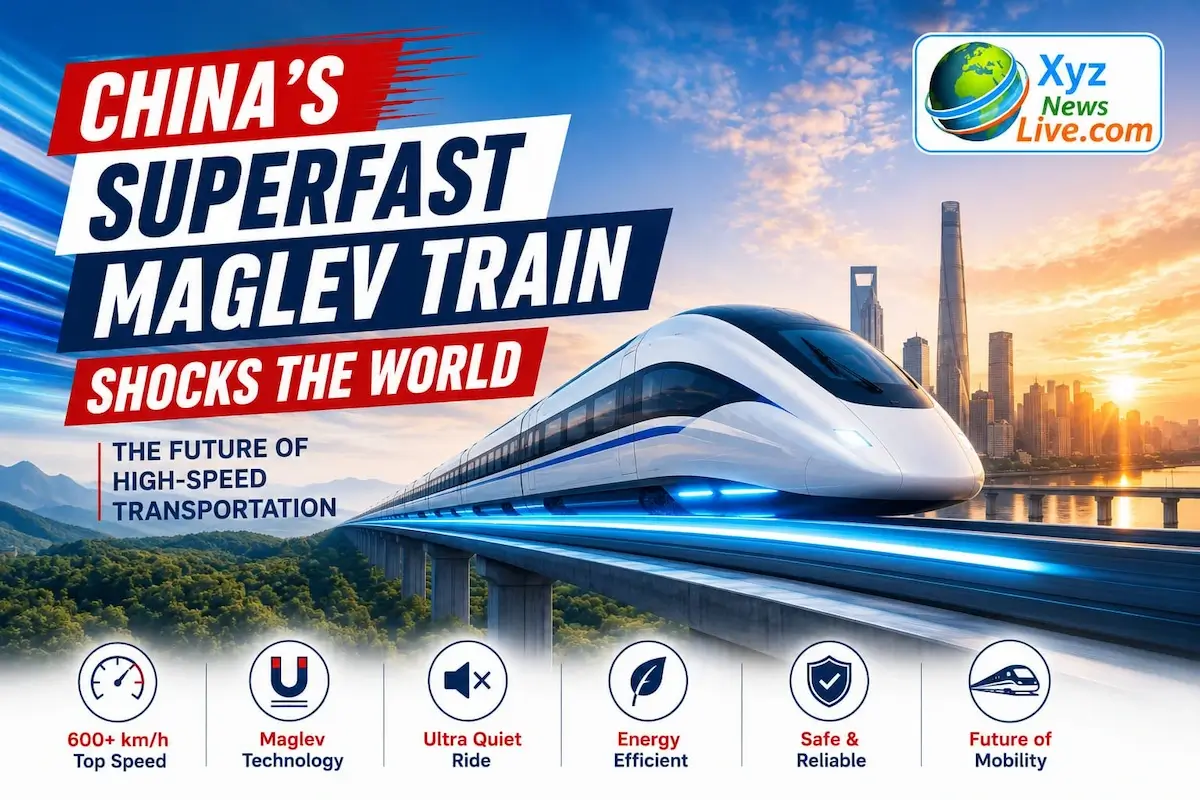
Many experts believe the technology has the potential to reshape long-distance travel in the same way commercial aviation transformed transportation during the 20th century.
While widespread implementation may take years, the progress demonstrated by China indicates that the future of ultra-fast rail travel is closer than ever.
The China Superfast Maglev Train has truly shocked the world with its remarkable speed, advanced engineering, and vision for the future. By utilizing cutting-edge magnetic levitation technology, China is pushing the boundaries of what rail transportation can achieve.
As nations seek cleaner, faster, and more efficient ways to move people, maglev trains may become one of the defining transportation innovations of the 21st century. Whether for business travelers, tourists, or daily commuters, the promise of ultra-high-speed rail offers exciting possibilities for the future.
With continued investment and technological advancement, China’s superfast maglev train could mark the beginning of a new era in global transportation.
Maglev Train:
China has made massive, rapid leaps in ultra-high-speed magnetic levitation, achieving milestones that are fundamentally redefining ground transit.
China already operates the world’s first commercially operated high-speed maglev line in Shanghai. The Shanghai Maglev Transportation connects Pudong International Airport to the city center, covering 30 km in just about 8 minutes while hitting an operating speed of 430 km/h.

The XYZ Official Team is the editorial team behind XYZ News Live. The team covers education, government schemes, business, entertainment, sports, and breaking news. Its mission is to provide readers with accurate, reliable, and up-to-date information through well-researched content.
Website: https://xyznewslive.com
3 thoughts on “China’s Superfast Maglev Train Shocks the World: The Future of High-Speed Transportation | 4 Big Update”