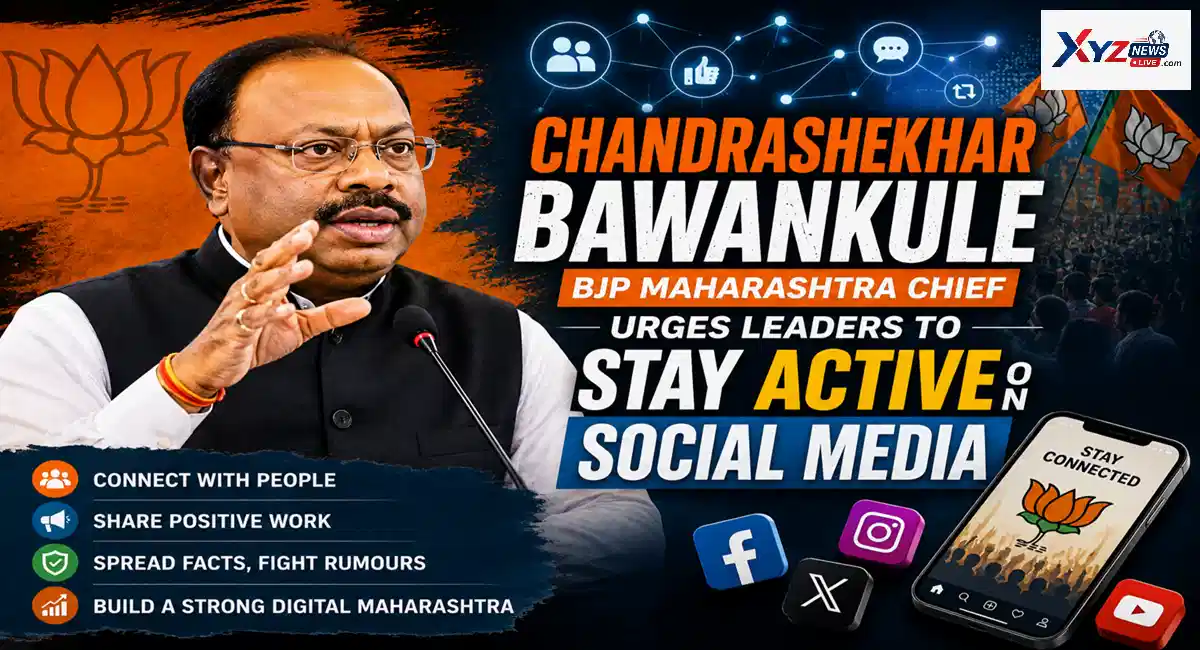
Chandrashekhar Bawankule: BJP Maharashtra Chief Urges Leaders to Stay Active on Social Media
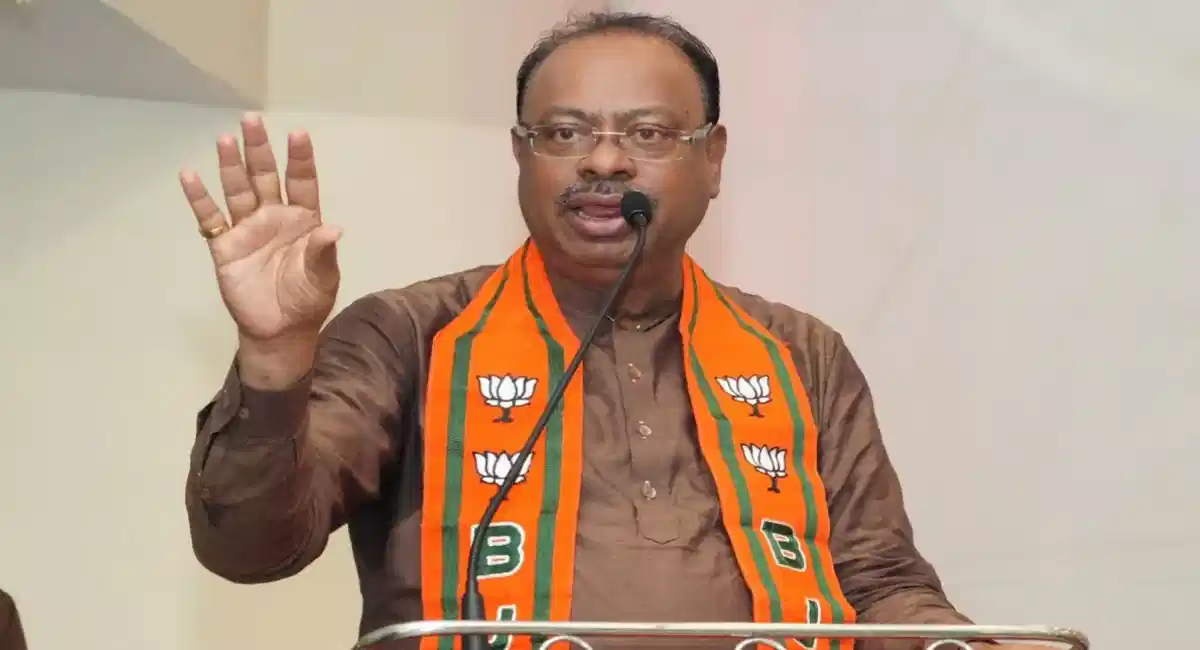
Maharashtra politics is increasingly witnessing the importance of digital communication, with political parties focusing on social media to connect directly with voters and supporters. Chandrashekhar Bawankule, a senior BJP leader in Maharashtra, has stressed the importance of maintaining an active presence on social media and using digital platforms effectively for political communication.
The emphasis on social media comes at a time when platforms such as Facebook, X, Instagram and YouTube have become important tools for political parties to communicate their programmes, explain government decisions and respond to criticism. For leaders and party workers, maintaining an active digital presence can help them reach audiences beyond traditional public meetings and rallies.
Chandrashekhar Bawankule’s Focus on Digital Outreach
The message associated with Chandrashekhar Bawankule reflects the BJP’s broader focus on strengthening its communication network at the grassroots level. Political communication is no longer limited to newspapers, television appearances, posters or public meetings. Social media now allows leaders to communicate directly with citizens and supporters.
An active social media strategy can help political workers highlight development projects, government schemes, public initiatives and party activities. It can also provide leaders with an opportunity to communicate their position quickly when political controversies emerge.
Chandrashekhar Bawankule himself maintains an active presence on X, where his public profile identifies him as Maharashtra’s Revenue Minister and Guardian Minister for Nagpur and Amravati districts. His account has more than 100,000 followers, demonstrating the potential reach of digital platforms for political communication. (X (formerly Twitter))
Why Social Media Has Become Important in Maharashtra Politics
Maharashtra has a large and politically diverse electorate. Reaching voters across cities, towns and rural areas requires multiple communication channels. Social media provides political organisations with a relatively fast way to circulate information and engage with different groups.
For BJP leaders and workers, social media can serve several purposes. First, it can be used to explain government policies and schemes. Second, it can help communicate party programmes and organisational activities. Third, it allows leaders to respond rapidly to statements made by political opponents.
The growing importance of digital communication is also visible in recent BJP-related discussions in Maharashtra. A recent report quoted BJP state vice-president Ravindra Chavan telling party leaders and workers that the organisation needed to improve its social-media presence and use the medium more effectively to communicate the party’s ideas and work to citizens. (Maharashtra Times)
This broader political environment explains why instructions encouraging leaders to remain active online have become increasingly significant.
Direct Communication With Voters
One of the biggest advantages of social media is direct communication. Traditionally, political messages often passed through journalists, television channels or other intermediaries. Social platforms allow leaders to publish statements, videos, photographs and updates themselves.
For Chandrashekhar Bawankule, such communication can be particularly relevant because he occupies both a political and governmental role. His public activities involve party organisation as well as his responsibilities as Maharashtra’s Revenue Minister.
Government and political communication, however, require clarity. Social media posts can spread quickly, and incomplete or inaccurate information can create confusion. Therefore, political leaders and workers need to ensure that information shared through digital platforms is accurate and presented responsibly.
Social Media and Party Organisation
The importance of social media goes beyond individual leaders. A strong digital network can connect state-level leadership with district, constituency and booth-level workers.
Party workers can use social platforms to communicate local programmes, meetings, public outreach activities and organisational campaigns. Videos and photographs from local events can also help create visibility for grassroots workers.
Earlier, Chandrashekhar Bawankule had also issued organisational instructions to BJP office-bearers on issues such as inclusiveness and preparations for local-body elections, highlighting the importance of structured grassroots organisation. (Marathi News Esakal)
The growing role of social media can therefore be viewed as another part of this wider organisational strategy.
Digital Politics Comes With Challenges
Although social media provides major opportunities, it also creates challenges for political parties. False information, edited videos, misleading claims and personal attacks can spread rapidly. Political organisations therefore need to balance speed with responsibility.
Leaders also need to understand that every social media post can reach audiences beyond their immediate supporters. Statements made online can quickly become part of wider political debates.
For this reason, a coordinated digital strategy is important. Party workers need to understand what information should be shared, how official announcements should be communicated and how disagreements should be handled online.
Maharashtra Politics and the Digital Future
The increasing focus on social media indicates that digital communication is likely to remain an important part of Maharashtra politics. Political parties are expected to invest more attention in online content, video communication, local-language messaging and direct engagement with voters.
For Chandrashekhar Bawankule, encouraging leaders and workers to remain active on social platforms can strengthen the BJP’s ability to communicate its message across Maharashtra. At the same time, effective digital outreach will depend not simply on the number of posts but on the quality, accuracy and relevance of the information being shared.
As political competition becomes increasingly digital, leaders who can communicate clearly and consistently across different platforms may have an advantage in reaching younger voters and digitally connected citizens.
Key Highlights:
-
Chandrashekhar Bawankule has been associated with the BJP’s emphasis on stronger digital communication.
-
Social media has become an important platform for political messaging in Maharashtra.
-
Leaders can use Facebook, X, Instagram and YouTube to communicate directly with citizens.
-
Digital platforms can help political workers highlight government schemes, development work and party activities.
-
Responsible and accurate communication remains important because political posts can spread rapidly.
-
The BJP’s wider organisational discussions in Maharashtra have also highlighted the growing importance of social media. (Maharashtra Times)
Conclusion
The growing importance of social media has changed the way political parties communicate with citizens. The emphasis associated with Chandrashekhar Bawankule reflects this broader shift towards digital outreach in Maharashtra politics. For political leaders and workers, being active online is increasingly becoming an essential part of public communication.
However, an effective social media presence requires more than frequent posts. Accuracy, consistency, responsible messaging and meaningful engagement with citizens will determine how successful political communication can be in the digital era.
FAQs:
1. Who is Chandrashekhar Bawankule?
Chandrashekhar Bawankule is a senior BJP leader from Maharashtra and serves as a minister in the Maharashtra government.
2. What did Chandrashekhar Bawankule say about social media?
Chandrashekhar Bawankule emphasised the importance of leaders and party workers maintaining an active presence on social media to communicate with citizens and strengthen digital outreach.
3. Why is social media important for political parties?
Social media allows political leaders to communicate directly with citizens, share information about government initiatives and highlight party activities quickly.
4. Which social media platforms are important for political communication?
Platforms such as X, Facebook, Instagram and YouTube are widely used for political communication and public outreach.
5. What is the main focus of BJP’s digital outreach?
The focus is on improving communication with citizens, highlighting organisational activities and making political messaging more accessible through digital platforms.
Disclaimer:
This article is based on publicly available information and reports. Political statements and developments may change over time. Readers are advised to verify the latest information through official sources before relying on it.






All news published on XYZ News Live is created, edited, and reviewed by our editorial team. Our goal is to provide readers with accurate, simple, and reliable information.
Website: https://xyznewslive.com