


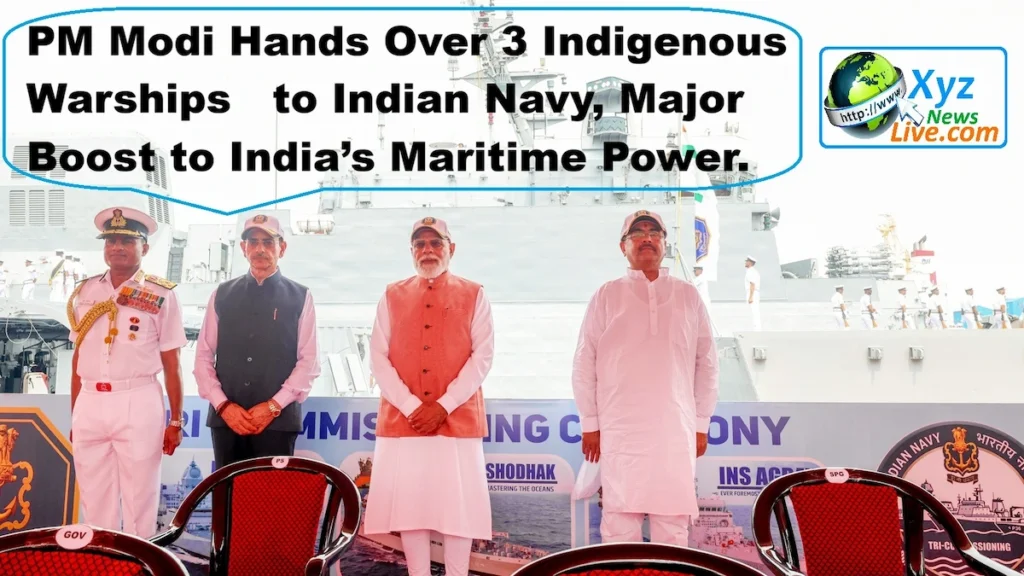
PM Modi Hands Over 3 Indigenous Warships to Indian Navy
India achieved another significant milestone in strengthening its defence capabilities when Prime Minister Narendra Modi officially handed over three indigenous warships to the Indian Navy. This move reflects India’s growing self-reliance in defence manufacturing and highlights the success of the government’s “Atmanirbhar Bharat” initiative.

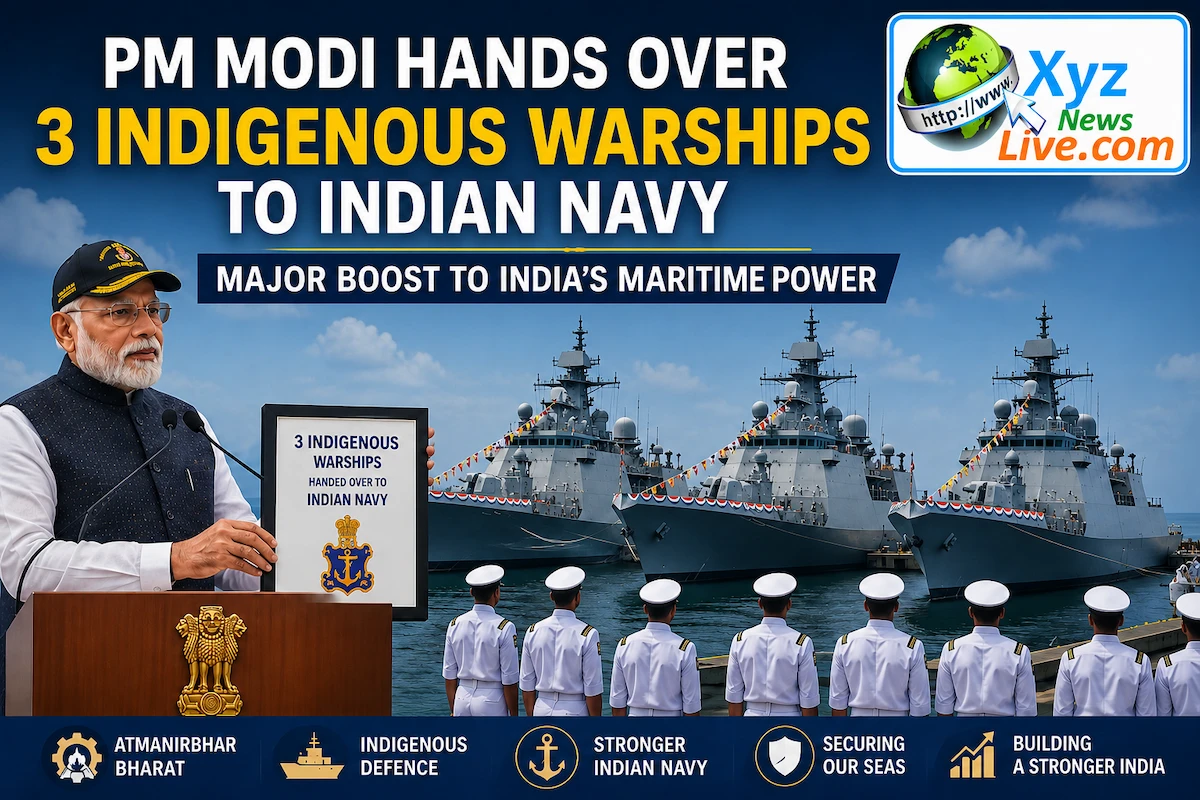
The induction of these indigenous warships is expected to significantly enhance India’s maritime security, naval strength, and strategic presence in the Indian Ocean Region. Defence experts have described this development as a major step toward reducing dependence on foreign defence equipment and strengthening national security.
PM Modi Indigenous Warships Strengthen Indian Navy: Key Headlines
- PM Modi handed over three indigenous warships to the Indian Navy.
- The warships were developed under the Atmanirbhar Bharat initiative.
- India continues to reduce dependence on foreign defense imports.
- Indigenous naval manufacturing receives a major boost.
- The Indian Navy’s maritime power and operational capabilities increase significantly.
- Experts call the move a landmark achievement for India’s defense sector.
PM Modi Indigenous Warships and Maritime Power. Key Highlights:
Strengthening India’s Maritime Security
The induction of three indigenous warships will significantly improve India’s ability to protect its maritime borders and strategic interests.
Success of Atmanirbhar Bharat
The warships showcase India’s growing self-reliance in defense production and technological innovation.
Enhanced Naval Readiness
These advanced vessels will improve surveillance, patrolling, and combat capabilities of the Indian Navy.
Economic and Industrial Growth
The project has generated employment and strengthened India’s domestic shipbuilding industry.
Strategic Importance
The commissioning comes at a crucial time when maritime security is becoming increasingly important in the Indo-Pacific region.
PM Modi Hands Over 3 Indigenous Warships:
Prime Minister Narendra Modi participated in a special ceremony where three indigenous warships were formally commissioned into the Indian Navy. The event was attended by senior defense officials, naval officers, shipbuilding experts, and government representatives.

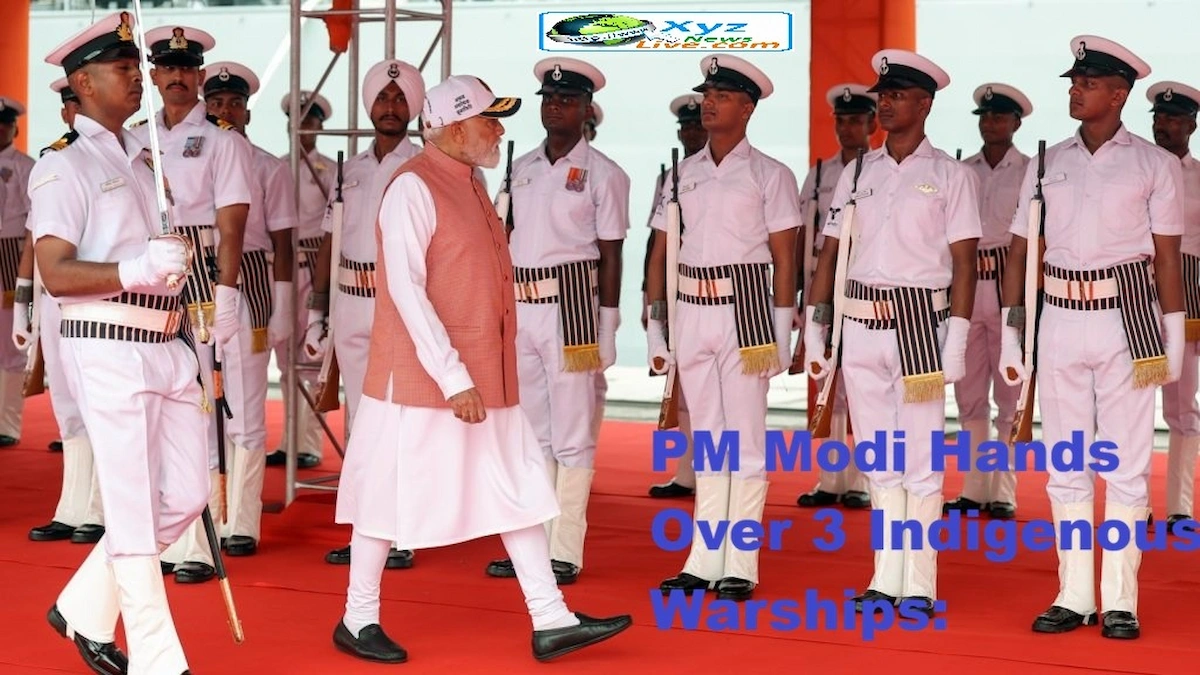
During the ceremony, PM Modi praised Indian engineers, scientists, and workers who contributed to the successful completion of these advanced naval vessels. He highlighted that India’s defense manufacturing sector is witnessing unprecedented growth due to focused government policies and investments.
The induction of these warships marks another major step in India’s efforts to strengthen its military capabilities through indigenous production.
PM Modi Indigenous Warships Project Explained:
India has traditionally relied on foreign countries for advanced military platforms and equipment. However, over the last decade, the government has prioritized domestic defense production through various initiatives.
The indigenous warship project was launched with several objectives:
- Promote self-reliance in defense manufacturing.
- Reduce dependency on imported military equipment.
- Enhance India’s technological capabilities.
- Generate employment opportunities.
- Strengthen national security.
The three indigenous warships are the result of years of planning, research, engineering, and collaboration between Indian shipyards, defense organizations, and private sector partners.
These warships demonstrate India’s ability to design, build, and operate sophisticated naval platforms that meet international standards.
PM Modi on Indigenous Warships and National Security:
While addressing the ceremony, Prime Minister Modi emphasized that India’s defense sector is undergoing a transformational phase.
According to official statements, the Prime Minister highlighted:
- India’s growing defense manufacturing ecosystem.
- The importance of self-reliance in national security.
- The strategic role of the Indian Navy.
- The success of the Atmanirbhar Bharat mission.
- India’s emergence as a trusted defense manufacturing nation.
Government officials also noted that indigenous defense projects contribute to economic growth, innovation, and technological advancement.
How PM Modi Indigenous Warships Affect India:
Many people may wonder how the commissioning of warships affects ordinary citizens. While the benefits may not be immediately visible, the impact is significant.
Better National Security
A stronger navy helps protect India’s coastline, maritime trade routes, and strategic interests.
Economic Growth
Defense manufacturing projects create thousands of jobs across various sectors.
Technological Advancement
Indigenous defense programs encourage innovation and technological development.
Reduced Import Costs
Producing military equipment domestically reduces the need for expensive imports.
Increased Global Recognition
Successful defense projects improve India’s reputation as a technologically capable nation.
What Defense Experts Say About PM Modi Indigenous Warships:
Defense analysts and strategic experts have largely welcomed the commissioning of the three indigenous warships.
Strengthening Self-Reliance
Experts believe India is steadily reducing its dependence on foreign defense suppliers.
Improved Naval Capability
The addition of advanced warships significantly enhances operational flexibility and combat readiness.
Strategic Advantage
India’s maritime position makes a strong navy essential for regional stability and security.
Long-Term Economic Benefits
Domestic manufacturing helps create a sustainable defense ecosystem while boosting employment and industrial growth.
Many experts describe the induction of indigenous warships as a turning point in India’s naval modernization journey.
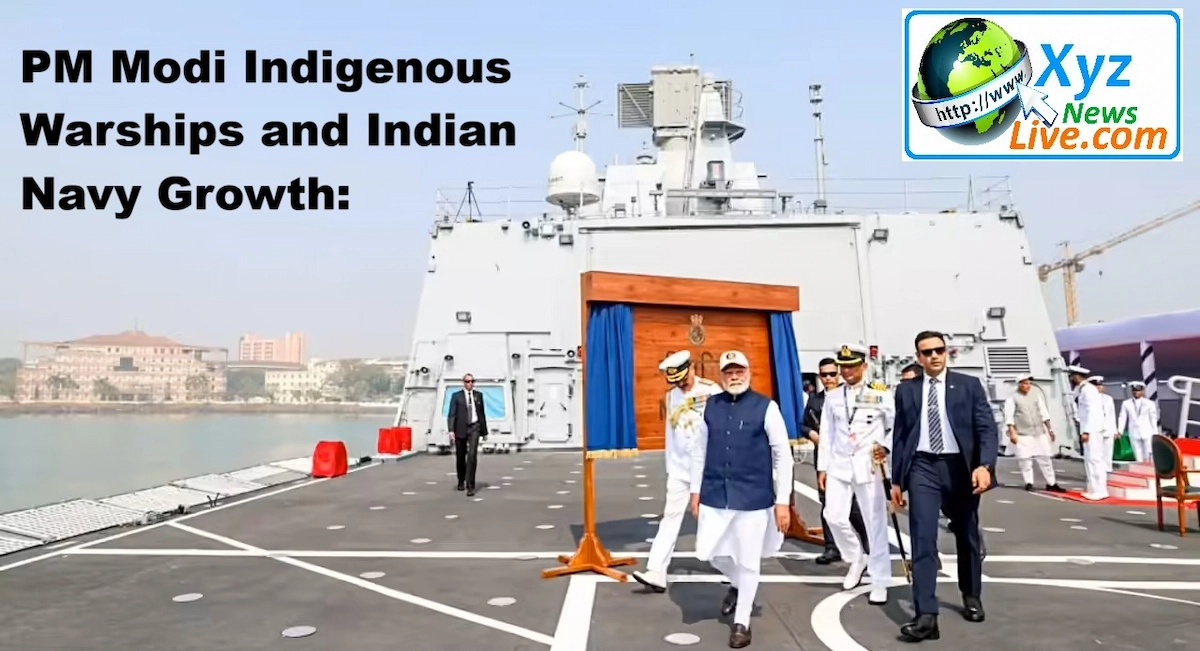
PM Modi Indigenous Warships and Indian Navy Growth:

Important Defense Facts
- India possesses one of the world’s largest armed forces.
- The Indian Navy plays a crucial role in safeguarding maritime trade routes.
- More than 90% of India’s trade by volume is transported through sea routes.
- Indigenous defense manufacturing has increased significantly in recent years.
- Several advanced naval projects are currently under development in India.
Shipbuilding Achievements
- Expansion of domestic shipbuilding infrastructure.
- Increased participation of private companies.
- Growth in defense exports.
- Enhanced research and development capabilities.
These achievements indicate India’s growing strength in indigenous defense production.
Future of India’s Indigenous Naval Expansion:
The commissioning of three indigenous warships is only one part of India’s larger naval modernization strategy.
Future developments may include:
Advanced Warships
India is expected to continue building next-generation destroyers, frigates, and patrol vessels.
Indigenous Submarines
The government is likely to accelerate domestic submarine development programs.
Artificial Intelligence Integration
Future naval platforms may incorporate AI-based systems and automation technologies.
Defense Exports
India aims to expand defense exports and become a major supplier of military equipment globally.
Stronger Maritime Presence
The Indian Navy is expected to play a larger role in securing the Indo-Pacific region.
PM Modi Indigenous Warships Trending Online:
The announcement quickly gained attention across social media platforms.
Positive Public Response
Many citizens praised:
- India’s growing defense capabilities.
- Success of the Atmanirbhar Bharat initiative.
- Achievements of Indian engineers and shipbuilders.
- Strengthening of national security.
National Pride
Thousands of users described the event as a proud moment for the nation and a symbol of India’s technological progress.
Defense Community Discussions
Defense enthusiasts and analysts highlighted the importance of indigenous naval assets in ensuring long-term strategic autonomy.
Overall, the public response has been overwhelmingly positive.
Conclusion:
The commissioning of three indigenous warships by Prime Minister Narendra Modi represents a historic achievement for India’s defense and maritime sectors. It reflects the country’s growing technological capabilities, commitment to self-reliance, and determination to strengthen national security.
As India continues investing in indigenous defense manufacturing, such projects will play a critical role in shaping the nation’s future. The successful induction of these warships sends a strong message that India is steadily emerging as a global defense power and a leader in maritime security.
Frequently Asked Questions (FAQs)
Q1. What are indigenous warships?
Indigenous warships are naval vessels that are designed and manufactured within India using domestic resources and technology.
Q2. Why are these warships important for India?
They strengthen maritime security, reduce dependence on imports, and support self-reliance in defense production.
Q3. How many warships were handed over by PM Modi?
Prime Minister Narendra Modi handed over three indigenous warships to the Indian Navy.
Q4. What is the Atmanirbhar Bharat initiative?
It is a government initiative aimed at making India self-reliant in various sectors, including defense manufacturing.
Q5. How will these warships benefit the Indian Navy?
The warships improve surveillance, defense capabilities, operational readiness, and maritime security.
Q6. What is the future of India’s naval modernization program?
India is expected to continue developing advanced warships, submarines, and next-generation naval technologies.
Q8. Why is maritime security important for India?
India depends heavily on sea routes for trade and energy supplies, making maritime security critical for economic and national interests.
Disclaimer:
PM Modi Hands Over 3 Indigenous Warships to Indian Navy, Major Boost to India’s Maritime Power,” is intended for general informational and news purposes only. While every effort has been made to ensure accuracy, some details may change as new official information becomes available.
Read More: https://xyznewslive.com/re-neet-2026-expected-cutoff-qualifying-percentile/?amp=1


I am a Founder and Editor of XYZ News Live. He writes on education, government schemes, technology, and breaking news. His goal is to provide readers with accurate and reliable information.