


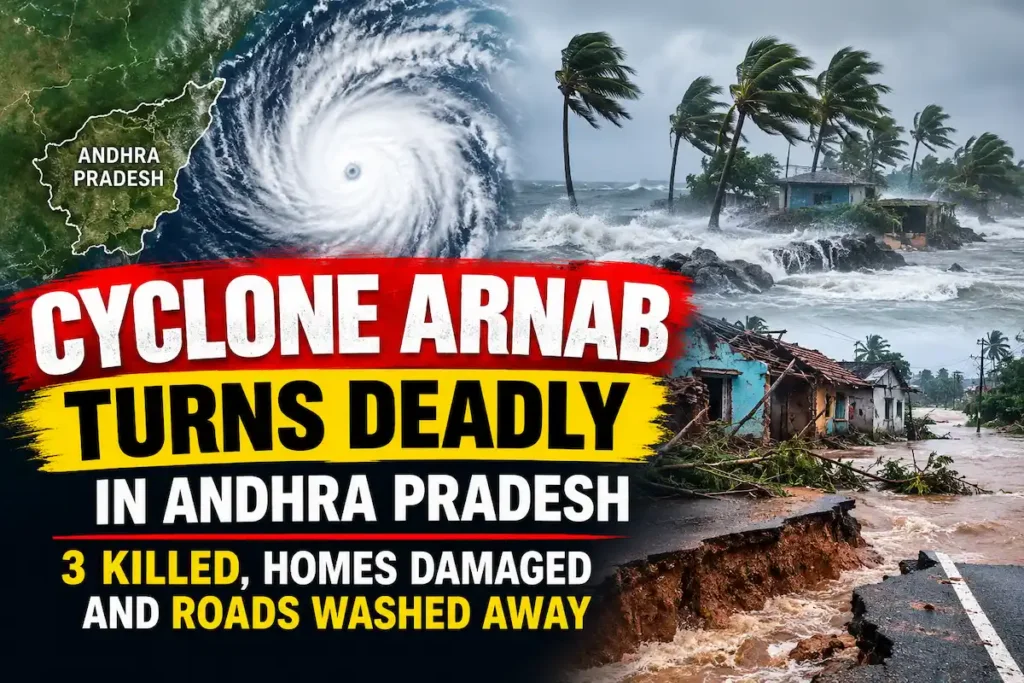
Cyclone Arnab Makes Landfall in Andhra Pradesh
Cyclone Arnab crossed the Andhra Pradesh and Yanam coasts during the early hours of Wednesday. The India Meteorological Department (IMD) said the landfall process took place between approximately 2 am and 8 am.
The storm weakened from a very severe cyclonic storm to a severe Cyclone Arnab storm after moving over land. However, its strong winds and intense rainfall had already caused widespread disruption across coastal districts.
Several areas experienced difficult conditions overnight as residents dealt with powerful gusts, rising water levels and damage to local infrastructure.
Three Deaths Reported as Damage Mounts
Andhra Pradesh has borne the brunt of Cyclone Arnab, according to preliminary information shared by the NDRF. Inspector General Narendra Singh Bundela said three people had died and 31 houses had been damaged.
The figures may change as authorities complete detailed assessments across affected districts. Separate reports from the state government have also indicated damage to homes, roads, trees and agricultural land.
For families living in vulnerable houses, the immediate concern is finding safe shelter and checking whether their homes can withstand further rainfall. Emergency personnel are working to reach affected communities and support restoration efforts.
Roads Washed Away and Electricity Disrupted
The Cyclone Arnab has damaged transport links in several coastal locations. In Uppada, Kakinada district, the coastal road was washed away, forcing authorities to restrict movement along the affected stretch.
Fallen trees and electricity poles also blocked roads in multiple districts, making travel difficult and disrupting power supplies. An old bridge in Tadiguda village in Alluri Sitaramaraju district was reportedly washed away, temporarily isolating a hamlet.
Restoration teams have been deployed to remove debris, assess damaged infrastructure and reopen essential routes. Residents have been urged to avoid flooded roads and damaged structures until officials declare them safe.
Thousands Shifted to Safer Locations
Authorities moved vulnerable residents into relief camps before the Cyclone Arnab reached the coast. The NDRF reported that around 57,000 people had been shifted to relief camps in Andhra Pradesh.
The evacuation effort was intended to reduce the risk to people living in low-lying coastal areas and locations exposed to strong winds and storm surges.
Emergency response teams are continuing rescue and relief operations, while officials are monitoring rainfall and water levels. Access to drinking water, food, medical care and safe accommodation remains important for families unable to return home.

What Happens Next After Cyclone Arnab?
Although Cyclone Arnab has weakened, its impact may continue as rainwater moves through rivers, drainage systems and low-lying settlements. Damaged roads and electricity infrastructure could also take time to repair.
Officials are assessing losses and coordinating recovery work across affected areas. Residents should follow local weather alerts, stay away from the sea and avoid crossing flooded roads or streams.
The coming hours will be important for determining the full extent of the damage and ensuring that families affected by the cyclone receive the assistance they need.
FAQs
1. How many people have died due to Cyclone Arnab?
The NDRF reported three deaths in Andhra Pradesh on October 28, 2026. Authorities are continuing to assess the cyclone's impact.
2. Which areas have been affected by Cyclone Arnab?
Coastal areas of Andhra Pradesh, including parts of Kakinada and surrounding districts, have reported damage to roads, houses, trees and electricity infrastructure.
3. Has Cyclone Arnab weakened after landfall?
Yes. The IMD reported that the storm weakened from a very severe cyclonic storm to a severe cyclonic storm after crossing the coast. Heavy rainfall and local flooding may still pose risks.











Disclaimer:
This article is based on available reports. Details regarding casualties, property damage and weather conditions may change as official assessments continue. Readers are advised to follow updates from local authorities and the India Meteorological Department (IMD).


Mohammad Raza is the author of XYZ News Live and has over 2 years of experience in digital content writing. His focus is on presenting news and important information in a simple, clear, and accessible language for readers.