


A first look based on published reports. Last updated: 14 October 2026.
Few laws divide Americans as sharply as the death penalty. Capital Punishment in US means a state or the federal government can sentence a person to death for the most serious crimes, but only after a trial, a separate sentencing decision and a long chain of appeals.
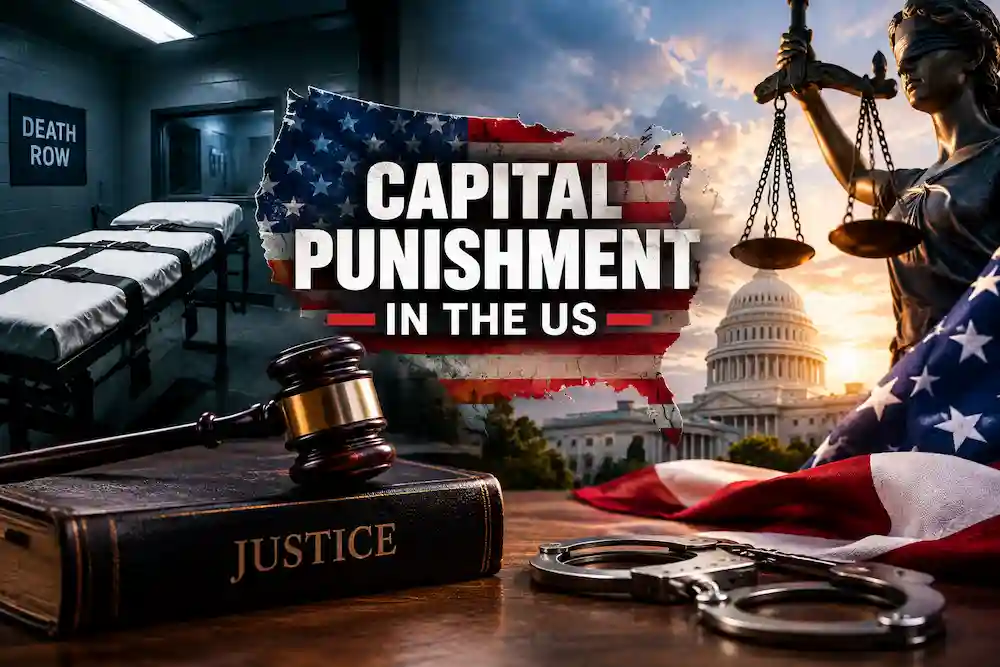

There is no single national rule. What is legal in Texas may be banned in Illinois, and a state that keeps the law on paper may not have carried out an execution in years. This guide breaks the topic into seven facts, so you can see the full picture without wading through legal jargon.
Key Highlights
- A divided country: 27 states still have the death penalty, while 23 states and Washington, DC have abolished it.
- Law on paper vs. reality: Four of the states that retain the death penalty have executive holds on executions. Based on the sources I checked, these are California, Ohio, Oregon and Pennsylvania.
- A long road to execution: Death sentences go through layered appeals, so prisoners often wait many years before a sentence is carried out.
- Latest in the news: Tennessee’s September 30, 2026 execution attempt of Christa Pike failed, and a court later ordered officials to preserve evidence from it.
1: Capital Punishment in US Depends on Where You Are
The country is split almost down the middle. 27 states still have the death penalty, while 23 states and the District of Columbia have abolished it. The same crime can therefore lead to very different punishments depending on the state where it happened.

2: A Law on the Books Does Not Mean Executions Happen
Here is a detail many readers miss. Four of the 27 retaining states have an executive hold on executions. Based on the sources I checked, these are California, Ohio, Oregon and Pennsylvania. In those states the law still exists, but governors have paused executions.
3: Abolition Is Not a New Idea
Some states moved away from the death penalty very early. Michigan was the first state to abolish it, back in 1847. More recently, Virginia ended it in 2021 and became the first Southern state to do so. So the movement against capital punishment is both old and still active.
4: The Federal Government Runs a Separate System
State law is only one part of the story. The federal government and the U.S. military also keep the death penalty as a possible punishment, apart from any state’s rules. Federal policy on executions has shifted over time, so always check a current, official source before quoting its status.
5: The Process Takes Years, Not Months
A death sentence is rarely the end of a case. After conviction, courts review the trial, the evidence and the constitutional questions involved. Because of these layered appeals, prisoners often wait many years before any sentence is carried out. A sentence can be upheld, overturned or changed to another punishment along the way.
6: Several Execution Methods Exist
Lethal injection is the primary method in the country. Still, some states also allow electrocution, firing squad, nitrogen hypoxia or the gas chamber under specific conditions. The choice of method is one of the most argued parts of the debate, because it raises questions about reliability and humane treatment. Capital Punishment in US
7: The Debate Is Far From Settled
People who support the death penalty say it delivers justice for victims’ families and is a fitting response to the worst crimes. Critics point to the risk of executing an innocent person, uneven treatment across race and income, high legal costs and long delays.
The deterrence argument also remains contested. Researchers have not produced a clear, settled answer on whether capital punishment prevents crime better than life imprisonment. Capital Punishment in US
Recent Developments in Capital Punishment in US
Tennessee’s failed execution attempt (September 30, 2026). Tennessee began its attempt to execute Christa Pike on September 30, 2026, but she was still alive more than an hour later and was taken to a local hospital. On October 8, a Tennessee court ordered officials to preserve evidence from the attempt. The case has reopened the debate over how states carry out executions and what should happen when a procedure goes wrong. Capital Punishment in US
First military execution in decades may be near. Reports say Nidal Hasan could be executed by firing squad on December 3, which would be the first military execution in 65 years. The plan drew criticism from Pope Leo XIV, who called the death penalty an attack on human dignity after the Pentagon’s decision to live-stream the execution was condemned by senior Church officials.
Executions continue in several states. Texas executed Jamaal Howard on October 7, 2026, the first execution after the Tennessee incident. More executions are scheduled for the rest of the year, including dates in Florida, Indiana, Alabama, Texas and Oklahoma. Capital Punishment in US
Dates for upcoming executions can change at the last minute, so please check the Death Penalty Information Center’s execution page before publishing.
Final Thoughts
Capital Punishment in US is not one policy but many, shaped by state laws, court review and political choices. Knowing which states keep the penalty, which have paused it and how long the process takes helps you read any news about it with more clarity. As public opinion, courts and lawmakers keep shifting, the topic will stay at the center of America’s justice debate. Capital Punishment in US
FAQs
1.How many states have the death penalty?
27 states retain it, and 23 states plus Washington, DC have abolished it.
2. Does every state with the law carry out executions?
No. Some states have paused executions through executive action even though the law remains active.
3. Which state abolished the death penalty first?
Michigan was the first, in 1847.
Disclaimer
This article is for informational purposes only and is not legal advice. Death penalty laws and execution dates can change at short notice, so please verify the latest details with official sources.













Sudhanshu is the author of XYZ News Live and has over 2 years of experience in digital content writing. His focus is on presenting news and important information in a simple, clear, and accessible language for readers.