
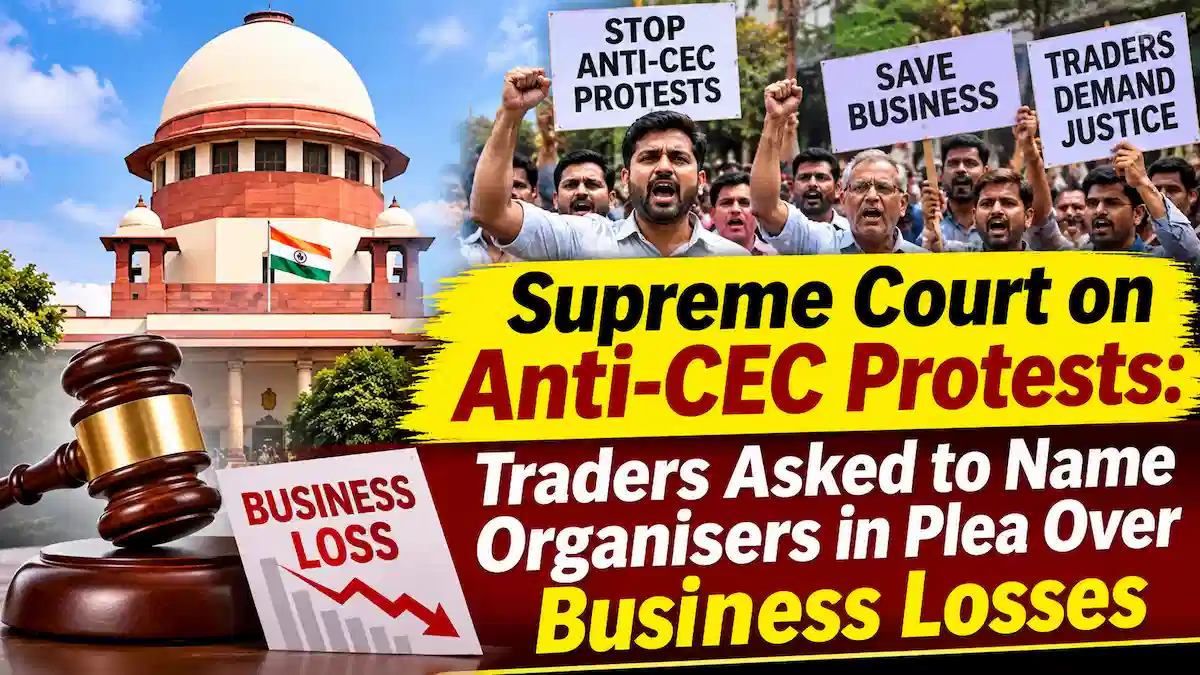
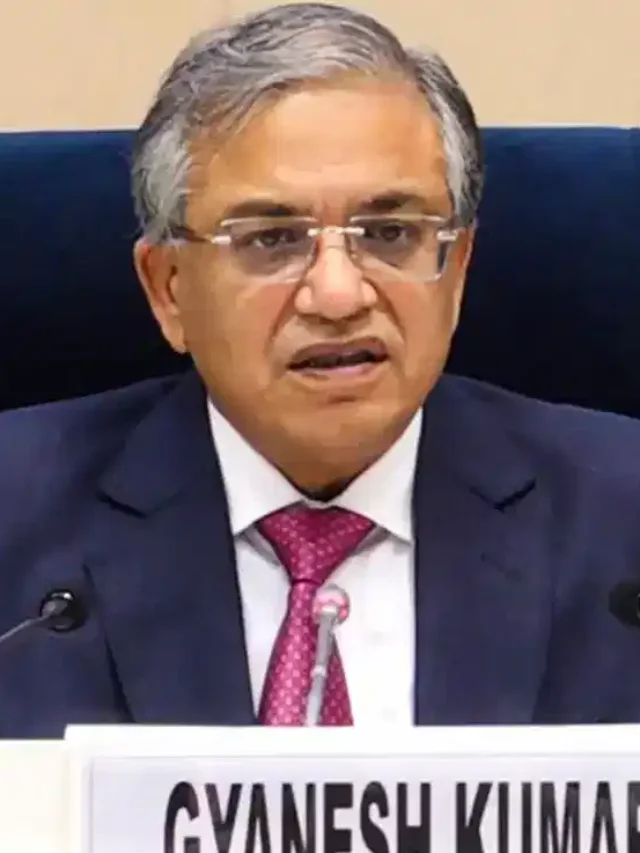
Anti-CEC Protests The Supreme Court of India has taken an important step in the ongoing controversy surrounding protests against Chief Election Commissioner (CEC) Gyanesh Kumar in Delhi. On November 3, the court directed traders’ associations complaining about business losses to include the organisers of the protests as parties in their petition.
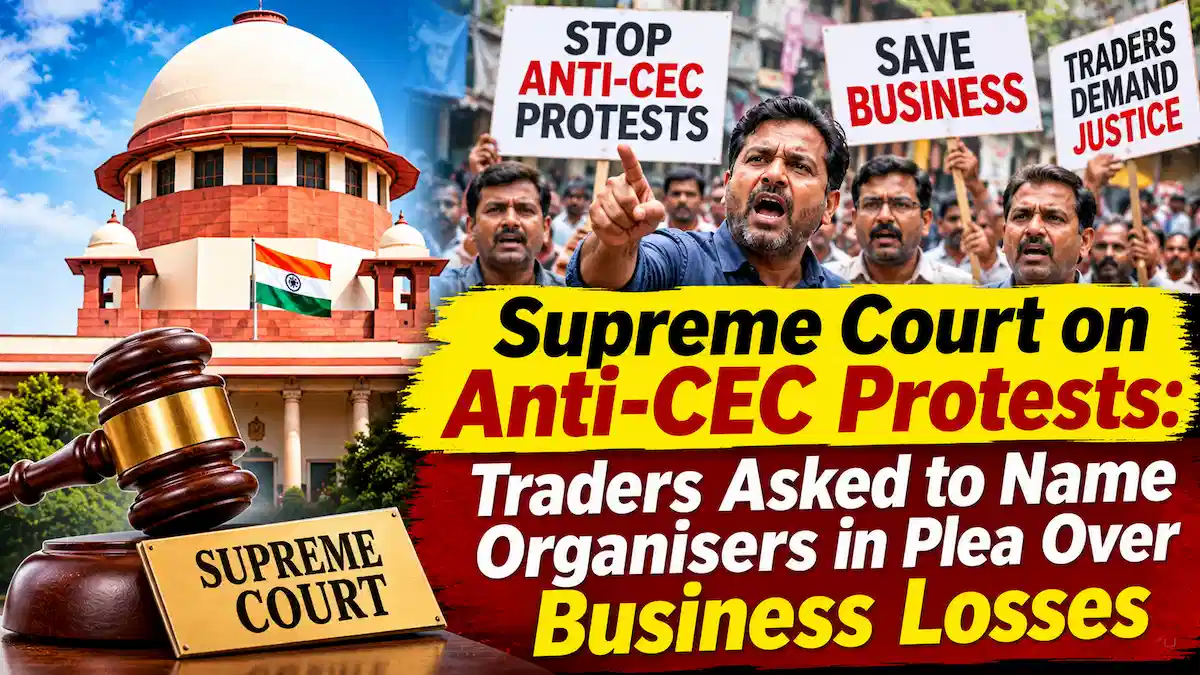
The development brings the conflict between the right to protest and the livelihood of local businesses into sharper focus. Traders have claimed that demonstrations and restrictions around protest locations have affected commercial activity, particularly during the festive shopping season, when many small businesses depend on higher sales.
Anti-CEC Protests Supreme Court Asks Traders to Include Protest Organisers
A bench comprising Chief Justice of India Surya Kant and Justices Joymalya Bagchi and V Mohana issued the direction while hearing several petitions connected with the anti-CEC protests in Delhi. Anti-CEC Protests
The court specifically asked the Kirana Committee Delhi to implead the organisations and individuals against whom allegations have been made. The bench indicated that it could not properly examine the traders’ complaints without hearing the parties responsible for organising the demonstrations.
The petitions cover several issues, including alleged police action, restrictions on protests, surveillance at designated protest locations and the impact of demonstrations on public life.
Anti-CEC Protests Traders Claim Heavy Business Losses During Festive Season
Representing the trading associations, senior advocate Mukul Rohatgi told the Supreme Court that businesses in Delhi had suffered because of the protests and related disruptions.
He highlighted the situation in Connaught Place, one of the capital’s busiest commercial areas, claiming that shops remained closed and customer activity had dropped significantly. Anti-CEC Protests
Rohatgi argued that the festive season was particularly important for traders because a large portion of their annual earnings comes from this period.
He also warned that continued disruptions could affect Diwali sales, putting additional financial pressure on shopkeepers, employees and small business owners.
The traders requested the court to consider practical measures to prevent further commercial disruption over the coming two months.
CJI Surya Kant Says Right to Protest Cannot Mean Indefinite Occupation
During the hearing, Chief Justice Surya Kant emphasised that every citizen has the constitutional right to protest. However, he also made it clear that no group can occupy a designated protest location indefinitely.
The Chief Justice observed that protest sites must remain available to different groups, including farmers, journalists and other citizens who may wish to demonstrate. Anti-CEC Protests
He stressed that permission for protests should clearly specify the duration and conditions under which demonstrations are allowed.
The court’s observations highlight the need to balance democratic rights with the everyday needs of residents, businesses and other members of the public.
Government Raises Concerns Over Protest Permissions
Solicitor General Tushar Mehta, appearing for the Delhi Police, told the bench that permission for the demonstration at Jantar Mantar had reportedly been granted for one day, but protesters continued occupying the location for 17 days.
He also submitted that protesters had attempted to march towards Parliament without the required permission.
However, senior advocate Menaka Guruswamy, representing the protesters, raised concerns about alleged police violence and the detention of thousands of people.
The government disputed the description of these actions as detentions, stating that individuals had been removed from the site.
Another lawyer argued that business disruption was linked to police barricading rather than the demonstrations themselves.
What Happens Next in the Anti-CEC Protest Case?
The Supreme Court’s direction to include protest organisers is an important procedural development. It will allow the court to hear the concerns of the traders alongside the responses of those accused of organising the demonstrations.
The wider batch of petitions also raises questions about alleged mass detentions, police conduct, metro station closures and internet restrictions during the protests. Anti-CEC Protests
For Delhi’s business community, the immediate concern remains the impact on customer movement and festive-season sales. For protesters, the central issue is protecting the right to demonstrate peacefully.
The court’s next steps could help clarify how designated protest sites should operate without causing unnecessary disruption to public life and commercial activity. Anti-CEC Protests
FAQs
1. Why did the Supreme Court ask traders to include protest organisers in their petition?
The Supreme Court directed traders to include the organisers as parties so that the court could hear their responses before examining allegations of business losses caused by the protests.
2. Which protests are involved in the Supreme Court case?
The case concerns demonstrations against Chief Election Commissioner Gyanesh Kumar in Delhi, along with related petitions involving police action and restrictions on public movement.
3. What did CJI Surya Kant say about the right to protest?
Chief Justice Surya Kant said everyone has the right to protest, but no group can occupy a designated protest location indefinitely. He stressed that protest venues should be available to different groups for specified periods.







Mohammad Raza is the author of XYZ News Live and has over 2 years of experience in digital content writing. His focus is on presenting news and important information in a simple, clear, and accessible language for readers.
1 thought on “Supreme Court on Anti-CEC Protests: Traders Asked to Name Organisers in Plea Over Business Losses”