
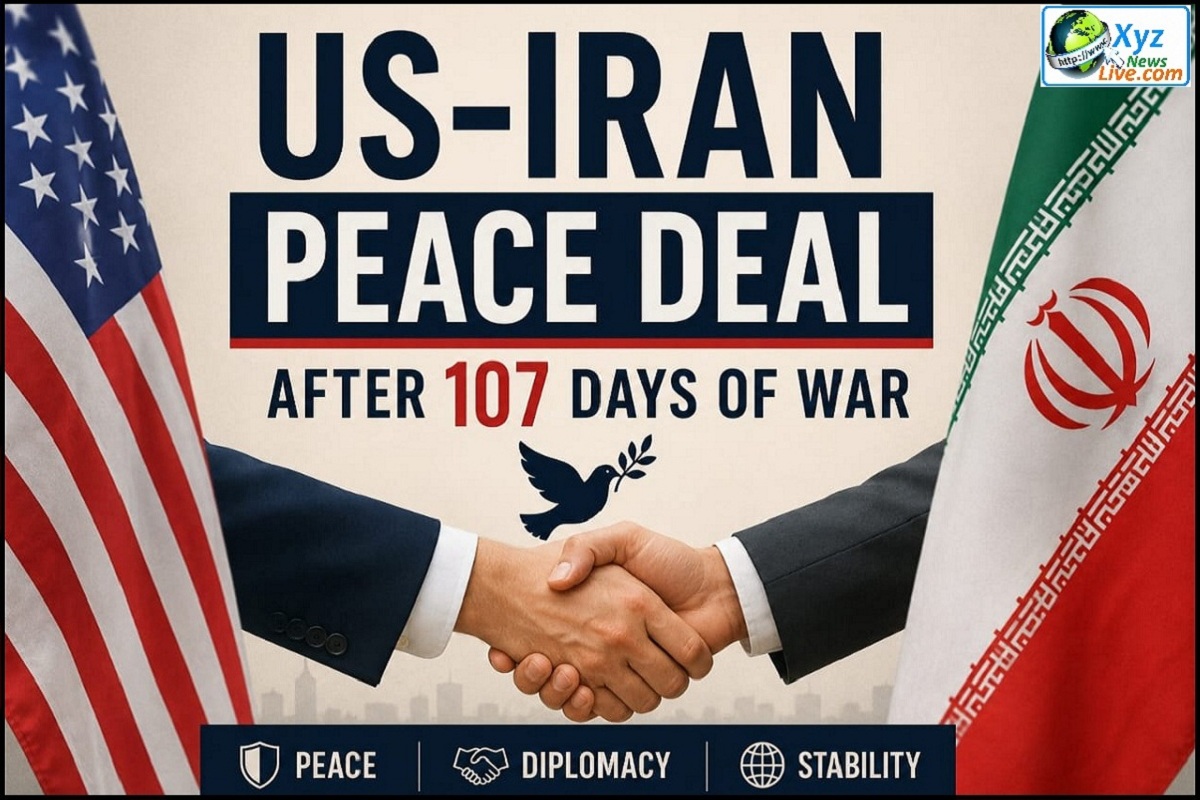
US-Iran Peace Deal After 107 Days of War: A Historic Turning Point
The US-Iran Peace Deal has become one of the most discussed international developments of 2026. After 107 days of conflict, negotiations and diplomatic efforts finally resulted in a framework agreement aimed at ending hostilities and creating a path toward long-term stability. The US-Iran Peace deal is being viewed as a significant geopolitical milestone that could influence global security, energy markets, and diplomatic relations for years to come.
Reports indicate that both nations agreed to a ceasefire framework after months of military tensions and economic disruptions. The agreement includes provisions designed to reduce military confrontation and reopen critical trade routes in the region.
What Is the US-Iran Peace Deal?
The US-Iran Peace deal is a diplometic framework designed to stop active militry hostiilities between the United State and Iran. The agreement reportedly includes a ceasefire period, negotiations on broader issues, and measures to stabilize the Middle East.
The US-Iran Peace deal focuses on:
- Ending military operations
- Reopening important maritime trade routes
- Reducing regional tensions
- Creating conditions for future diplomatic talks
- Supporting economic stability
Experts believe the US-Iran Peace deal could become one of the most important diplomatic achievements in recent Middle Eastern history.
Why the US-Iran Peace Deal Matters
The significance of the US-Iran Peace Deal extends far beyond the two countries involved. The Middle East plays a crucial role in global energy supplies, international trade, and regional security.
For months, uncertainty surrounding the conflict created concerns among governments, investors, and international organizations. The US-Iran Peace deal has the potential to reduce these concerns and encourage economic recovery.
Key reasons why the US-Iran Peace deal matters include:
1. Reduced military tensions.
2. Improved regional stability.
3. Greater confidence in international markets.
4. Better conditions for diplomacy.
5. Protection of global shipping routes.
Also read:https://xyznewslive.com/tag/noida-news/
The 107-Day Conflict: A Brief Overview
Before the US-Iran Peace deal, tensions escalated into a prolonged period of conflict. The confrontation affected multiple areas across the region and attracted global attention.
During the conflict:
- Military activities increased.
- Shipping concerns affected international trade.
- Oil market volatility intensified.
- Regional alliances faced new challenges.
The announcement of the US-Iran Peace deal came after extensive diplomatic efforts involving international mediators and negotiations.
How the US-Iran Peace Deal Could Affect Global Oil Markets
One of the most important aspects of the US-Iran Peace deal is its potential impact on energy markets.
The Strait of Hormuz is one of the world’s most important shipping routes for oil and natural gas. Any disruption in this area can influence global energy prices. Reports suggest that the agreement includes efforts to restore normal shipping operations and improve maritime security.
Potential benefits include:
- More stable oil prices.
- Improved energy supply chains.
- Reduced transportation risks.
- Greater confidence among global investors.
Because energy markets are interconnected, the US-Iran Peace deal could have worldwide economic implications.
Also Read:https://xyznewslive.com/prakash-raj-to-join-bengaluru-protest-today/
Diplomatic Impact of the US-Iran Peace Deal
The US-Iran Peace Deal represents more than just a ceasefire. It is also a test of diplomacy in an increasingly complex international environment.
Many analysts view the US-Iran Peace deal as proof that negotiations remain possible even after extended conflict. Diplomatic engagement may now focus on broader issues including:
- Regional security.
- Economic cooperation.
- Maritime stability.
- Future conflict prevention.
The success of the US-Iran Peace deal will depend on whether both sides continue to honor their commitments during upcoming negotiations.
Challenges Facing the US-Iran Peace Deal
Despite optimism, several challenges remain.
The US-Iran Peace deal is still considered fragile by many observers. Long-standing disagreements have not disappeared, and future negotiations will be critical.
Major challenges include:
1. Trust Deficit
Years of political disagreements have created deep mistrust between both countries.
2. Regional Security Concerns
Several regional actors have their own interests and priorities.
3. Economic Issues
Sanctions, trade restrictions, and economic recovery remain important topics.
4. Nuclear Discussions
Future negotiations may involve complex discussions regarding nuclear-related issues. �
The Guardian
These factors will influence whether the US-Iran Peace deal develops into a lasting peace arrangement.
International Reactions to the US-Iran Peace Deal
Global reactions to the US-Iran Peace deal have been mixed but generally positive.
Many governments welcomed the reduction in tensions and expressed hope that diplomacy would continue. International organizations also emphasized the importance of dialogue and peaceful conflict resolution.
Supporters believe the US-Iran Peace Deal could:
- Prevent further escalation.
- Improve economic conditions.
- Strengthen regional cooperation.
- Reduce humanitarian concerns.
However, some analysts remain cautious and are waiting to see how implementation unfolds.
Economic Opportunities After the US-Iran Peace Deal
The US-Iran Peace deal could create significant economic opportunities across the region.
Possible benefits include:
- Increased trade activity.
- Stronger investor confidence.
- Better shipping efficiency.
- Economic recovery initiatives.
- Infrastructure development.
Business leaders are closely monitoring the situation because a successful US-Iran Peace deal may encourage investment and commercial growth throughout the Middle East.
Future Outlook for the US-Iran Peace Deal
The future of the US-Iran Peace deal will depend on continued diplomatic engagement and practical implementation.
Several key developments are expected in the coming months:
- Additional negotiations.
- Monitoring of ceasefire commitments.
- Economic discussions.
- Regional security talks.
- International diplomatic support.
If these efforts succeed, the US-Iran Peace Deal could become a foundation for broader stability in the Middle East.
The US-Iran Peace Deal marks a potentially historic moment after 107 days of conflict. While challenges remain, the agreement offers a path toward reduced tensions, stronger diplomacy, and greater regional stability. The US-Iran Peace Deal also carries important implications for global energy markets, international trade, and geopolitical security.
As negotiations continue, governments, businesses, and international observers will closely watch whether the US-Iran Peace Deal can transform a period of conflict into a lasting opportunity for peace and cooperation. Current reports indicate that a framework agreement and ceasefire process have been established, but long-term success will depend on future negotiations and implementation.
The US-Iran Peace Deal was not only influenced by Washington and Tehran but also by the involvement of several international powers. Countries across Europe, Asia, and the Middle East closely monitored the conflict because any escalation could have affected global trade, energy supplies, and regional security. Diplomatic channels remained active throughout the crisis, with multiple nations encouraging dialogue over confrontation.
International organizations and foreign governments repeatedly called for restraint and peaceful negotiations. Their efforts helped create an environment where both sides could engage in discussions without further escalation. Many analysts believe that international diplomatic pressure played an important role in bringing the two countries back to the negotiating table.
Another important factor behind the US-Iran Peace deal was the growing concern over global economic stability. Rising tensions in the Middle East often create uncertainty in financial markets, affecting oil prices, stock markets, and international trade. Investors around the world were closely watching developments, as a prolonged conflict could have disrupted critical supply chains and increased inflation in many countries.
The agreement also has significant implications for regional security. For years, tensions between the United States and Iran have influenced political and military dynamics across the Middle East. The US-Iran Peace deal provides an opportunity for regional governments to focus more on economic development, infrastructure projects, and diplomatic cooperation rather than security concerns.
Also Read:https://xyznewslive.com/catch-up-shikshan-abhiyan-2026-up-education-news/
Experts suggest that the success of the agreement will depend on consistent communication between both countries. Confidence-building measures, transparency, and adherence to agreed commitments will be crucial in maintaining peace. Any misunderstanding or violation of the agreement could create fresh tensions, making ongoing diplomacy essential.
The business community has also reacted positively to news surrounding the US-Iran Peace deal. Companies involved in energy, shipping, logistics, and international trade view the agreement as a potentially stabilizing factor. Improved security conditions could encourage investment, boost trade volumes, and support economic growth throughout the region.
From a historical perspective, the US-Iran Peace deal represents an important chapter in the long and often complicated relationship between the two nations. Decades of political disagreements, economic sanctions, and diplomatic challenges have shaped relations between Washington and Tehran. While one agreement cannot solve every issue, it can serve as a foundation for future cooperation and conflict prevention.
Looking ahead, policymakers and analysts will continue evaluating the effectiveness of the US-Iran Peace deal. The coming months will likely involve additional negotiations, implementation reviews, and efforts to address unresolved issues. If both sides remain committed to diplomacy, the agreement could become a model for resolving future international disputes through negotiation rather than confrontation.
Also Read:https://xyznewslive.com/catch-up-shikshan-abhiyan-2026-up-education-news/

I am a Founder and Editor of XYZ News Live. He writes on education, government schemes, technology, and breaking news. His goal is to provide readers with accurate and reliable information.